
Overlay vs. Milling & Repaving in Atlanta
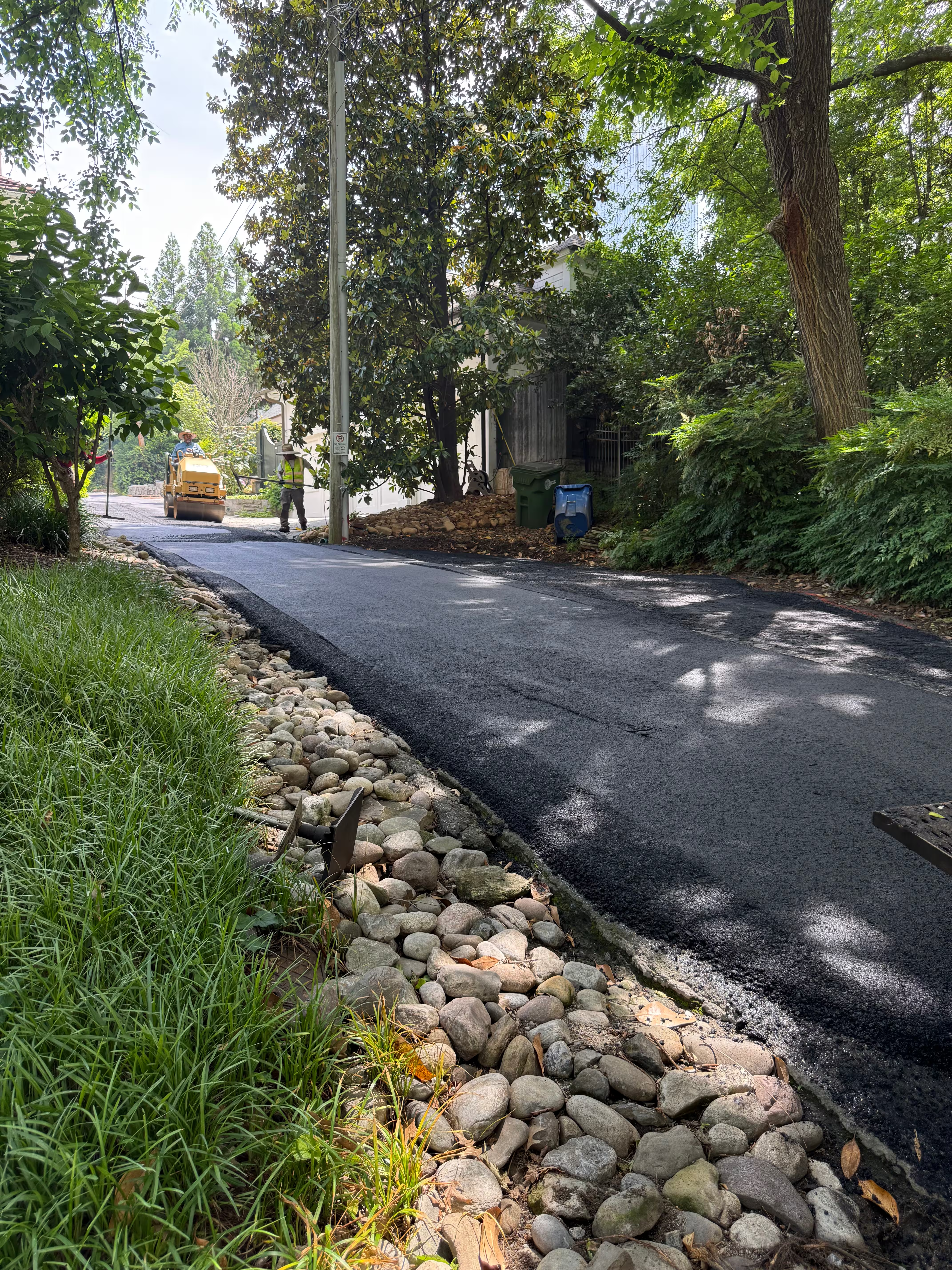
Asphalt Overlay vs. Milling & Repaving: What’s Right for Your Atlanta Parking Lot?
If you manage a commercial property, HOA, or multifamily community in the Atlanta metro, you’ve probably heard two common recommendations when a parking lot starts failing: asphalt overlay or milling & repaving. They sound similar, but they solve different problems—and choosing the wrong one can mean paying twice.
Here’s the simple way to think about it:
- Overlay is like a new “wearing surface.” It improves ride quality and appearance when the foundation is still doing its job.
- Milling & repaving removes the failed top layer (sometimes more), corrects issues, then installs new asphalt designed to last.
When an Asphalt Overlay Makes Sense
An overlay can be a strong option when the lot is structurally stable and the issues are mostly surface-level.
Overlay is usually a good fit if you have:
- Moderate cracking (not “alligator” cracking everywhere)
- Oxidation / graying asphalt
- Minor ruts or low spots that can be corrected before paving
- A lot that drains correctly (or can be corrected without major reconstruction)
What overlay does well:
It improves appearance fast, smooths the surface, and extends life—as long as the base is solid.
What overlay doesn’t fix:
If the base is failing, overlay will mirror the same failures over time. You’ll see cracks reflect back through the new surface.
When Milling & Repaving Is the Smarter Call
Milling & repaving is the move when the lot is failing structurally or has widespread defects that an overlay won’t stop.
Milling & repaving is usually needed if you have:
- Alligator cracking (spider-web cracking) across large areas
- Ongoing pothole problems in the same locations
- Significant rutting, depressions, or washboarding
- Prior overlays that didn’t hold
- Drainage problems that are causing water to sit and destroy the base
Milling removes the failed layer so the new asphalt isn’t placed on top of problems that are already “baked in.”
The Atlanta Factor: Heat, Rain, and Drainage
Atlanta lots fail faster when:
- Water sits after heavy rain
- Low areas freeze-thaw repeatedly (even mild winters still matter)
- Traffic loads are high (delivery trucks, dumpsters, fire lanes)
If your lot has standing water, the real fix is usually grading, correcting low spots, and patching/base repair before you decide overlay vs mill/repave.
Cost Drivers (What Actually Changes the Price)
Whether it’s overlay or milling, pricing is usually driven by:
- Square footage + thickness
- How much patching/base repair is needed first
- Milling depth and haul-off
- Curb transitions, manholes, drainage structures
- Traffic control requirements and scheduling constraints
- Striping and ADA layout
Quick Rule of Thumb
- If the lot is mostly stable and you’re trying to extend life and improve appearance → Overlay
- If the lot is failing underneath or you’re chasing potholes constantly → Milling & Repaving
If you want it done right the first time, the decision should be based on a walk-through and a clear scope—not guesses.
Need a recommendation that won’t waste money?
Biran Paving Group can evaluate your lot and tell you what actually makes sense for the Atlanta metro—overlay, mill & repave, or targeted repairs.
FAQs
How long does an overlay last in Atlanta?
With proper prep and a stable base, overlays can extend a lot’s life meaningfully—especially when paired with repairs and good drainage.
Can you overlay over cracks?
You can, but cracks often reflect back through if they’re structural. Proper crack treatment and base repair matter.
Do I need to mill before overlay?
Sometimes. Milling is often used to correct elevations at curbs, drainage, or transitions and to remove failed surface layers.